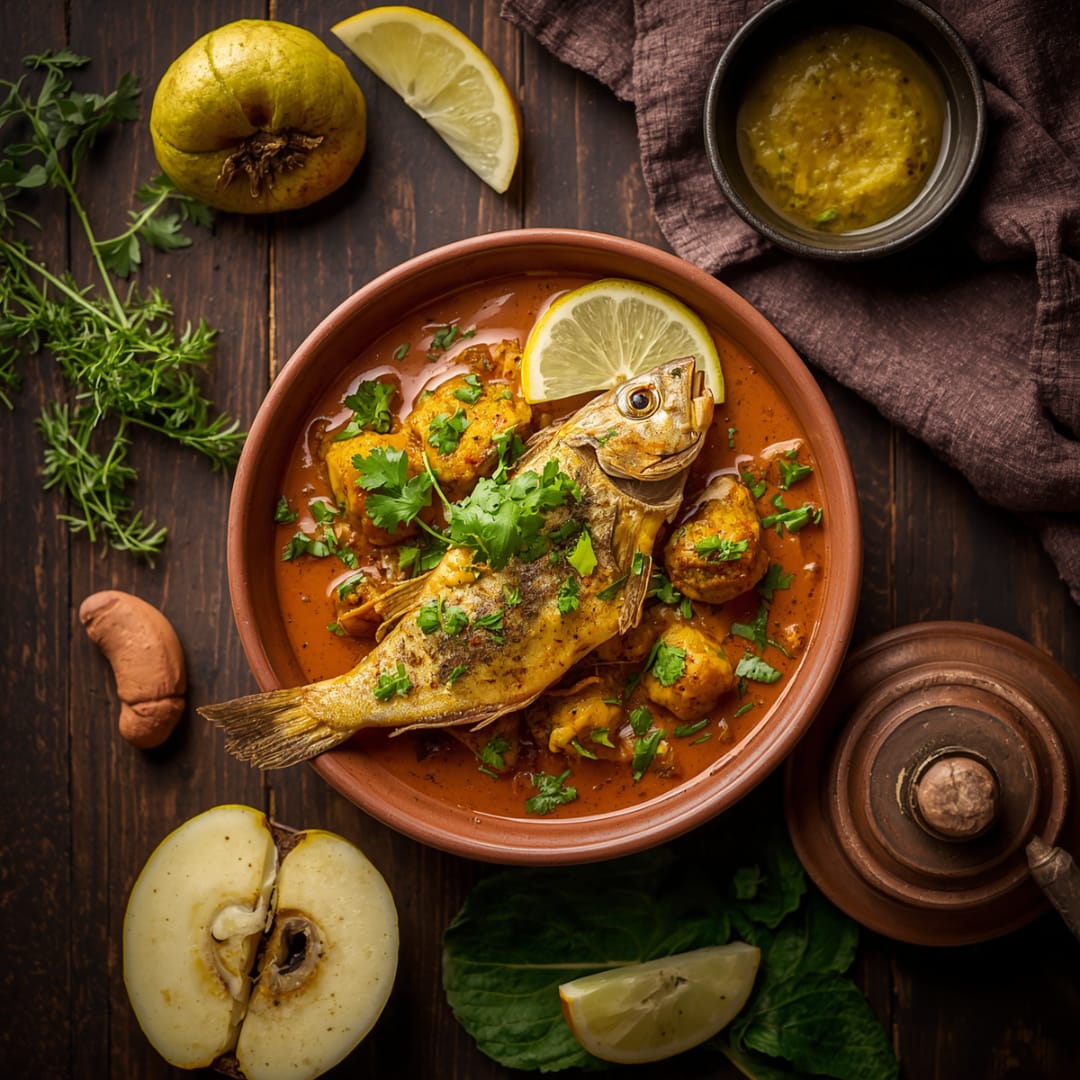
Masor Tenga to Patot Dia — The Complete Guide to Assamese Fish Cooking
Fish is not just food in Assam. It is identity, ceremony, and the quiet language of home. When a family sits down to eat in Guwahati or any village along the Brahmaputra, fresh fish on the plate is rarely an afterthought — it is the centre of the meal. Assamese fish cooking has evolved over centuries into a cuisine of extraordinary subtlety: minimal oil, few spices, and an emphasis on the natural flavour of the fish itself. If you are new to Assamese food or simply want to cook better at home, this guide covers the essential dishes every fish lover in Guwahati should know.
Masor Tenga — The Iconic Sour Fish Curry
No dish defines Assamese fish cooking more completely than Masor Tenga. The name translates directly — mas means fish, tenga means sour — and the dish is exactly that: a light, tangy fish curry built around a souring agent. The most common version uses Ou Tenga (elephant apple), though tomatoes, Kaji Nemu (a thick-skinned local lemon), and Thekera (dried mangosteen) are also popular.
The technique is deceptively simple. Fish — usually Rohu, Catla, or Borali — is lightly fried in mustard oil, then simmered in a thin broth flavoured with Panch Phoron (five-spice mix), the souring agent, and minimal spices. The result is a curry that is sharp, aromatic, and deeply cleansing — the kind of dish Assamese families reach for on hot afternoons or after a rich meal. Masor Tenga is a staple during Rongali Bihu, Assam’s spring festival, when it is eaten as a symbol of freshness and new beginnings. 💡 Best fish for Masor Tenga: Fresh Rohu (Rui), Catla (Bhokua), or Borali.
Patot Dia — Fish Steamed in Banana Leaf
Patot Dia is one of the oldest cooking methods in Northeast India and arguably the most elegant. Small whole fish or fish pieces are wrapped tightly in banana or turmeric leaves along with raw turmeric, chopped onion, garlic, green chilli, Culantro (locally called Bon Dhunia), and salt. The parcels are then either baked on an iron tawa or smoked over charcoal until the leaves char and the fish steams inside its own juices.
The result is intensely aromatic and completely free of added fat. The banana leaf imparts a faint earthy sweetness; the raw turmeric keeps the flesh firm and adds a gentle bitterness. This method of cooking — called Khorikat in Karbi tradition — is a living piece of Northeast Indian heritage. It also happens to be extraordinarily healthy: no oil, no cream, just fresh fish and fresh herbs. 💡 Best fish for Patot Dia: Small whole freshwater fish — Puthi, Goroi (snakehead), or small Magur (catfish).
Khar-Based Fish Dishes — The Alkaline Tradition
Khar is perhaps the most unique element of Assamese cooking. It is an alkaline extract made by filtering water through the dried ashes of the banana tree — specifically the outer skin — which creates a solution used as both a flavouring and a tenderising agent. Fish cooked in Khar broth is called Masor Khar, and it produces a flavour unlike anything else in Indian cuisine: slightly bitter, deeply savoury, and strangely addictive. Aari Masor Khar (catfish in khar gravy) is one of the most celebrated versions. The fish simmers in a thin, pale broth with raw papaya, mustard oil, and the khar, developing a gelatinous, silky texture. The dish is considered a digestive and is often served at the beginning of a traditional Assamese meal.
Masor Jol — The Everyday Herbal Fish Curry
Less well-known outside Assam but deeply cherished within it, Masor Jol is a herbal fish curry made with medicinal herbs from the kitchen garden. Leaves of Noroxingho (curry leaves), Bon Dhunia (wild coriander), Man Dhunia, Manimuni (Asiatic pennywort), and Tengesi are combined with turmeric and mustard oil to create a broth of extraordinary fragrance. The dish is considered therapeutic — Assamese grandmothers have prescribed it for generations to aid digestion and restore energy.
The Secret Behind Great Assamese Fish Cooking
What unites all these dishes is the primacy of fresh fish. Assamese fish recipes are built on subtlety — the fewer the spices, the more essential the quality of the fish. A Masor Tenga made with day-old fish that has lost its sweetness will never taste right, no matter how perfect the Ou Tenga. A Patot Dia with farm-fresh Goroi is a revelation; the same dish with stale fish is flat and disappointing.
This is why sourcing matters. The best Assamese home cooks are obsessive about freshness — they want fish that was alive in the morning, not sitting on a market slab since the previous afternoon. When you order from Minbury, fish is sourced fresh daily at 4 AM, kept alive in RAS-equipped tanks, and delivered to your door the same morning. Your Masor Tenga deserves nothing less. Fresh fish, right technique, and a little patience. That is the whole philosophy of Assamese fish cooking — and it has produced some of the most beautiful food in India.
Frequently Asked Questions
What is the best fish for making traditional Assamese Masor Tenga?
Fresh local varieties like Rohu (Rui), Catla (Bhokua), or Borali are the absolute best choice. You can buy completely cut and cleaned fresh local fish on Minbury.
How is Patot Dia cooked traditionally?
Patot Dia involves wrapping small whole fish or pieces in banana leaves with mustard oil, raw turmeric, and local herbs like Culantro, then slow-steaming or smoking them over charcoal. Get ready-to-use local fish varieties to make your own Patot Dia today.
Can I make Masor Tenga without tomatoes or lemon?
Yes! Traditional Assamese cooking uses diverse seasonal souring agents like dried mangosteen (Thekera), elephant apple (Ou Tenga), or even hog plum (Amora) depending on the season.
Is mustard oil mandatory for authentic Assamese fish cooking?
Raw, cold-pressed mustard oil is central to Assamese cuisine, giving dishes like Patot Dia and Masor Jol their characteristic earthy pungency.
All local fish, premium meats, duck, and farm fresh eggs are sourced clean at 4 AM and delivered to your doorstep within 60 minutes.