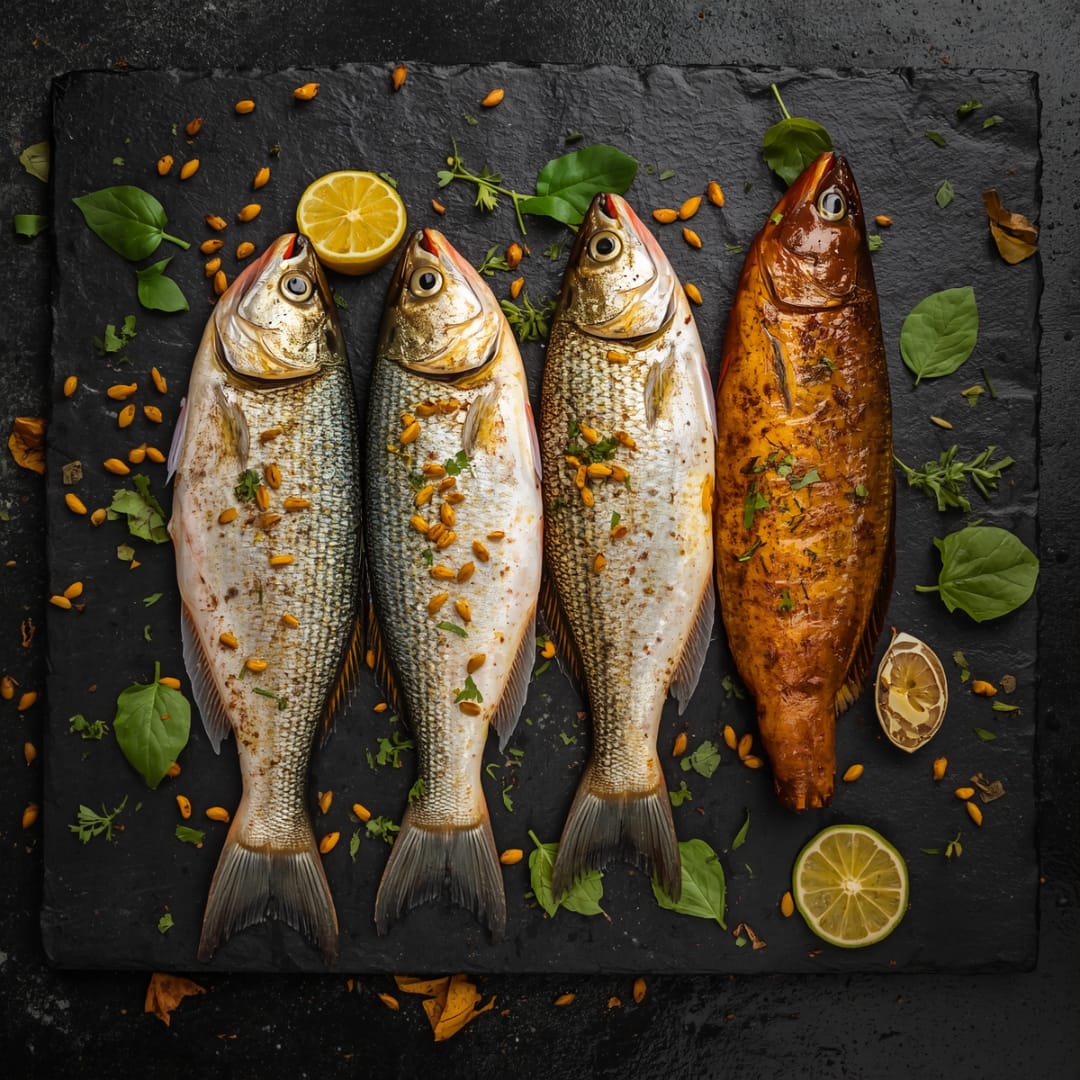
Rohu, Catla, Magur, Borali — Know Your Assamese Fish Before You Buy
Walk into any fish market in Guwahati — Fancy Bazar, Ganeshguri, or the neighbourhood stall at the end of your lane — and you will be confronted with a bewildering array of fish. Some you will recognise; others will be sitting in tanks with Assamese names you half-know and cooking applications you are not quite sure about. This guide is designed to fix that. Here is everything you need to know about the fresh fish of Assam before your next purchase.
Rohu (Rui / Rohit) — The Everyday King
If Assam had a national fish, Rohu would be a strong contender. This large, silver-scaled carp is the most widely eaten freshwater fish across Northeast India and Bengal. Its flesh is firm, moderately oily, and mildly sweet — versatile enough for almost any preparation. Taste: Mildly sweet, firm flesh with a satisfying bite. Becomes silky and tender when slow-cooked. 💡 Best for: Masor Tenga, mustard fish curry, simple fish fry, Rohu kalia. Price range: ₹280–₹350 per kg (local varieties). Buying tip: Look for bright silver scales, firm flesh that springs back when pressed, and clear, bright eyes. Avoid fish with sunken or cloudy eyes.
Catla / Bhokua — The Rich, Full-Flavoured Carp
Catla (called Bhokua in Assamese) is closely related to Rohu but has a broader head and a slightly richer, more pronounced flavour. The flesh contains a little more fat than Rohu, which makes it particularly well-suited to bold curry preparations. The large pieces hold their shape during long cooking, making Catla the preferred choice for festive fish curries. Taste: Rich, full-flavoured, slightly fattier than Rohu. 💡 Best for: Rich fish curries, fish head preparations, special occasion dishes. Price range: ₹300–₹400 per kg. Buying tip: Catla is a large fish — look for a proportionate, muscular build. Avoid any fish with a fishy or ammonia-like smell.
Magur (Catfish) — The Medicinal Powerhouse
Magur is a walking catfish, easily identified by its elongated body and whisker-like barbels. In Assamese tradition, Magur has a status beyond ordinary food — it is considered deeply nourishing for the elderly, post-surgery patients, and anyone recovering from illness. Its flesh is extremely soft, high in protein, and produces a rich, gelatinous broth when cooked in a light khar or herb-based curry. Taste: Delicate, extremely soft flesh. The cooking broth is rich and slightly thick. 💡 Best for: Masor Khar, herbal Masor Jol, light broths for recovery cooking. Price range: ₹350–₹500 per kg (local live Magur commands a premium). Buying tip: Fresh live Magur is vastly superior to pre-killed stock. Buy from sellers who keep it in tanks.
Borali (Wallago Attu) — The Lower Assam Favourite
Borali is a large, elongated catfish particularly popular in lower Assam. Its flesh is white, soft, and has a distinctive, slightly robust flavour that pairs beautifully with ginger-forward preparations. Borali cooked in ginger gravy and served with steamed rice is a signature comfort meal in the Barpeta region and surrounding districts. Taste: Soft white flesh, more flavourful than Magur, with a pleasant depth. 💡 Best for: Ginger gravy preparations, light fish stew, steaming in banana leaf. Price range: ₹350–₹450 per kg.
Goroi (Snakehead / Channa) — The Village Treasure
Goroi is a snakehead fish that carries enormous cultural weight in Assamese rural life. It is the fish most commonly used for Patot Dia (the banana leaf preparation) and is deeply associated with home cooking and village traditions. Goroi has firm, flavourful flesh and very few fine bones, making it easier to eat than many smaller river fish. Taste: Firm, savoury flesh with a strong, characteristic flavour. 💡 Best for: Patot Dia (banana leaf smoking), dry fish fry, herbal curries. Price range: ₹400–₹600 per kg (wild-caught local Goroi is scarce and prized).
Ilish / Hilsa — The Celebration Fish
Ilish is the fish of festivals. When Ilish arrives in Assam — primarily during the monsoon season when it migrates upriver — it commands premium prices and premium emotions. Its flesh is extraordinarily rich, layered with fat that melts during cooking, producing a flavour unlike any other freshwater fish. In Assamese cuisine, Ilish is typically prepared simply — fried in mustard oil or steamed in mustard paste — so as not to mask its natural complexity. Taste: Rich, oily, deeply flavourful — the most distinctive freshwater fish in India. 💡 Best for: Mustard Ilish (Sarson Wali Ilish), light steaming, Ilish Masor Tenga. Price range: ₹800–₹1,500 per kg depending on season and size.
Frequently Asked Questions
What is the difference between Rohu and Catla in Assamese cooking?
Rohu is mildly sweet with moderately oily, firm flesh, making it perfect for everyday fish fry and light curries. Catla (Bhokua) is broader, slightly richer and fattier, which holds up beautifully in heavy, festive curries. Check out both premium fresh local fish cuts on Minbury.
Why is Magur fish prized in Assam?
Magur (catfish) is exceptionally nutritious, easy to digest, and highly recommended for recovery, post-surgery, and immune boosting. Explore our fresh, live-tank-sourced Magur and catfish options.
Which Assamese freshwater fish has the fewest bones?
Borali and large catfish varieties have a thick central bone and very few fine intramuscular bones, making them exceptionally easy to clean and consume.
What is the best way to cook local Goroi (snakehead) fish?
Goroi is traditionally roasted over embers (Khorikat Diya) or wrapped in banana leaves (Patot Dia) with mustard paste, ginger, garlic, and wild coriander.
All local fish, premium meats, duck, and farm fresh eggs are sourced clean at 4 AM and delivered to your doorstep within 60 minutes.